Nara vs Uji
which day trip?
Nara if this is your first time in Japan or you have children with you. The Great Buddha is the most impressive single object either town holds, and 1,200 bowing deer are what a seven-year-old will still describe in a decade. Forty-five minutes and ¥760 by Kintetsu. Uji if you have already done Nara, if matcha is a reason rather than a souvenir, or if you want a day that is quiet by 17:00. Seventeen minutes and ¥240, with Byodo-in, the Nintendo Museum and a river you can sit beside. Both sit on southern rail axes, so either pairs perfectly with a dawn start at Fushimi Inari.
The two-second version
Nara
A 15-metre bronze Buddha in one of the largest wooden buildings on earth, ¥800, plus 1,200 wild deer that bow for ¥200 crackers. Forty-five minutes and ¥760 on the Kintetsu express, whose station is a five-minute walk from the park. The scale is the point, and no other day trip from Kyoto matches it. Full verdict →
Nara morning tour ↗Uji
Seventeen minutes and ¥240 on the JR rapid. Byodo-in's Phoenix Hall is the building on the ¥10 coin; the tea shops on the approach roast in the street; the Nintendo Museum is one stop away if the lottery goes your way. Genuinely calm after 16:00, and outside Kyoto's lodging tax if you sleep there. Full verdict →
Uji walking tour ↗Nara vs Uji on the things that decide it
Fares are one-way from Kyoto Station at standard adult rates, without a rail pass.
| What you care about | Nara | Uji | Winner |
|---|---|---|---|
| Journey and fare | Kintetsu express 45 min · ¥760. Limited express 35 min · ¥1,280 | JR rapid 17 min · ¥240. Keihan also runs from Gion-Shijo | Uji |
| Time needed | Half a day minimum, a full day with Naramachi | Half a day, or a full one with the Nintendo Museum | Draw |
| Headline sight | Todai-ji's Great Buddha — 15 metres of eighth-century bronze, ¥800 | Byodo-in's Phoenix Hall — ¥600 plus ¥300 for the interior | Nara |
| Crowd level | Heavy 11:00–14:00, with school groups. Fine before 10:00 | Moderate, and genuinely quiet after 16:00. Nakamura Tokichi Honten is the exception, with documented 2–4 hour waits | Uji |
| With kids | The best family day in the region: deer, a giant Buddha, a pillar to crawl through | Good if you have Nintendo Museum tickets. Without them, it is a tea town | Nara |
| Food | Kakinoha-zushi, kudzu sweets, and Nakatanidou's high-speed mochi pounding for free | The matcha economy — soba, sweets, ice cream, and tea you can grind yourself | Uji |
| Cost of the day | ¥1,520 fares + ¥800 entry + ¥200 crackers ≈ ¥2,500 before food | ¥480 fares + ¥900 Byodo-in ≈ ¥1,400 before food, or ¥3,300 more for Nintendo | Uji |
| Rainy day | Poor — the park is open ground with little shelter | Decent — Byodo-in's museum, the tea shops and the Nintendo Museum are all indoors | Uji |
| Overall verdict | First trip, families, and anyone who wants one enormous thing | Second trip, matcha, rain, and a quiet afternoon | Depends |
Both towns sit on rail lines running south out of Kyoto Station, which is why the strongest version of either day starts at Fushimi Inari at 06:30 — free, empty at that hour, and directly on the way. Be back on a train by 09:00 and you arrive ahead of everybody.
Why Uji has quietly become the better second day trip
Seventeen minutes and ¥240 buys a town with a UNESCO temple, Japan's most serious tea culture, a river with rapids running through the middle of it, and since October 2024 a Nintendo museum.
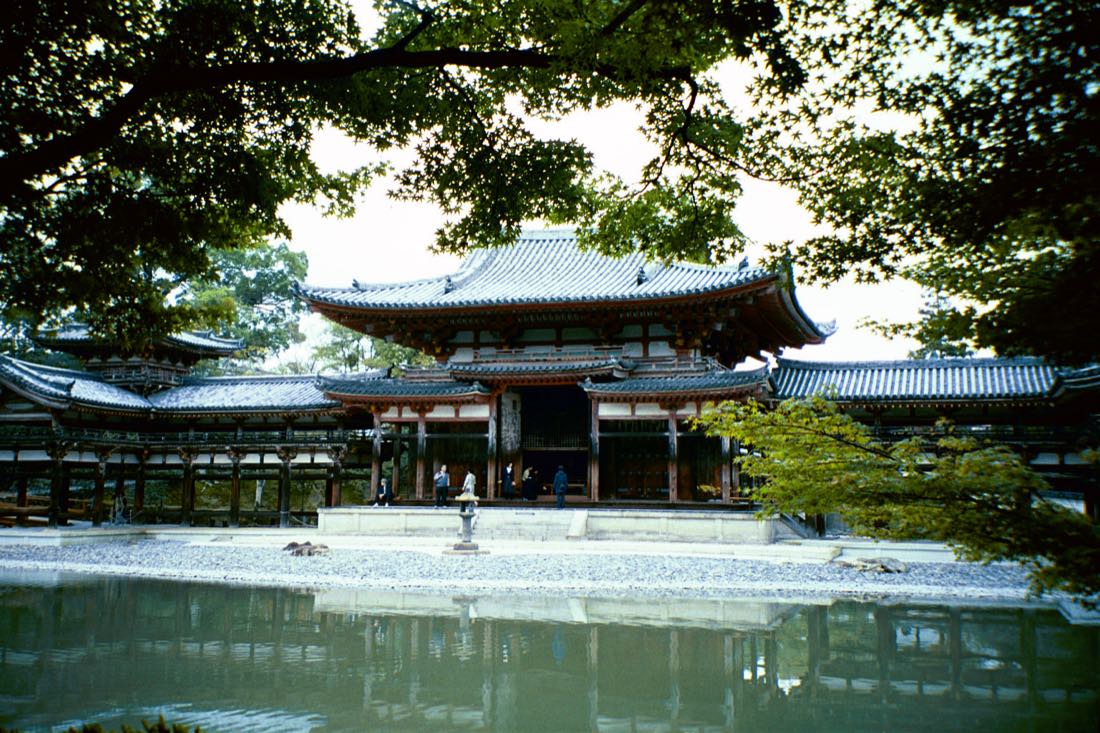
Byodo-in — ¥600, plus ¥300 for the Phoenix Hall interior. Built in 1053, it is the building engraved on the ¥10 coin and the phoenix on it is on the ¥10,000 note. The hall sits on an island in a reflecting pond and the interior visit is a timed ticket bought on the day. The adjoining museum is modern, air-conditioned and genuinely good.
The matcha economy is the reason to linger. Uji has grown tea since the twelfth century, and the approach street to Byodo-in is shops roasting and grinding in the doorway. Tsuen Tea claims a founding date of 1160. Nakamura Tokichi Honten is the famous one and has documented waits of two to four hours — go early, or go to any of the six other excellent shops with no queue. The matcha shortage is real: the May 2025 tencha auction averaged a record ¥8,235 per kilo, so buy tins in the morning before the good grades sell out. Where to buy matcha.
The Nintendo Museum turned Uji into a full day. ¥3,300 adult, ¥2,200 teen, ¥1,100 child, in Ogura one stop from Uji, closed Tuesdays. It is lottery-only, drawn around three months ahead through a Nintendo Account with results on the 1st of the following month; cancellation tickets surface roughly two months out. Tickets are named and QR-coded, so resold ones do not work. How the lottery works.
The lodging-tax angle. Uji is a separate city and does not levy Kyoto's lodging tax. On a ¥400-a-night band that is not a reason to move. At the ¥4,000 tier it is worth the arithmetic, and Uji is 17 minutes from Kyoto Station either way.
What Uji does not have is a single object on the scale of the Daibutsu. If you only have one day trip in you and you have never been to Japan, that is the whole argument for Nara.
Why Nara still wins a first trip
Nara was the capital from 710 to 794, before Kyoto existed as one, and its scale reflects that. Everything is inside one walkable park.
The Great Buddha is the argument. Fifteen metres of eighth-century bronze inside a hall that is one of the largest wooden buildings in the world — and a two-thirds-scale rebuild of a larger original. You reach it through the Nandaimon gate, past two 8-metre guardian figures carved in 1203. Nothing in Uji, and very little in Kyoto, produces the same reaction on first sight.
The deer are what children remember. Around 1,200 of them, wild, protected for over a thousand years, bowing for ¥200 crackers. Buy from a licensed stall away from the busiest lawn, show open palms when you are out, and take the autumn rut seriously — the stags get pushy from September to November, which is why the park cuts their antlers each October. The full deer rules.
It is also the better half day. Todai-ji, Kasuga Taisha's 3,000 stone lanterns and the park are one continuous walk from the Kintetsu station. You can be back in Kyoto for a late lunch, which is harder in Uji once the tea shops get hold of you.
The one real drawback is that the middle of the day is bad — school groups arrive around 10:00 and the main lawn between the gate and the hall becomes a scrum until about 14:00. Go early and eat in Naramachi at midday.
Tours for either day
Both towns are easy to do independently with an IC card. Temple gates take cash at the door and never sell out — a tour is worth paying for because of the guiding and the hour, not to skip a queue that does not exist. These are worth it for the early arrival and the context, not for access.
Nara vs Uji FAQ
Nara or Uji — which is better as a day trip from Kyoto?
Nara if it is your first trip or you have children: the Great Buddha and 1,200 bowing deer beat anything Uji has. Uji if you have already done Nara, if you care about matcha, or if it is raining — it is 17 minutes and ¥240 away and has more indoors.
Can I do Nara and Uji in the same day?
You can, and you should not. They are on different lines heading south and combining them means about two hours of trains for two rushed half-visits. If you have one day, pick one. If you have two spare days, do them separately and start each with Fushimi Inari at dawn.
How much does a day trip to Uji cost?
About ¥1,400 per person before food: ¥240 each way on the JR rapid, ¥600 for Byodo-in and ¥300 more for the Phoenix Hall interior. Add ¥3,300 if you have a Nintendo Museum ticket, and ¥1,000–2,000 for a proper tea sitting.
Is Uji worth visiting just for matcha?
Yes, if tea is genuinely an interest — this is where Japanese tea culture has been concentrated since the twelfth century and the shops grind and roast in the doorway. If matcha means an ice cream, you can get an excellent one in central Kyoto and save the trip.
Which is better with kids, Nara or Uji?
Nara, unless you hold Nintendo Museum tickets. Deer that bow, a Buddha the size of a house, and a hole in a temple pillar children crawl through — it is the best family day in the region. Uji without Nintendo tickets is a tea town, and children know it.
Do I need a rail pass for Nara or Uji?
No. Uji is ¥240 on JR and Nara is ¥760 on Kintetsu, which is not a JR line at all — so a JR Pass does nothing for the better Nara route. See the pass verdicts, where the short answer is to tap an IC card and buy nothing.
Is it worth staying overnight in Uji instead of Kyoto?
Only if you are chasing the top lodging-tax band. Uji is a separate city and charges no Kyoto lodging tax, but it is a quiet town at night and you give up Gion after dark and the 6am temple openings. At ¥400 a night the trade is not worth it — see the cost breakdown.