What to eat
in Kyoto
Kyoto's food is subtler and cheaper than its reputation suggests, apart from the one meal where it is neither. Here is what each thing costs, when to eat it, whether you need to book, and how to tell a real restaurant from a stall built for tourists.
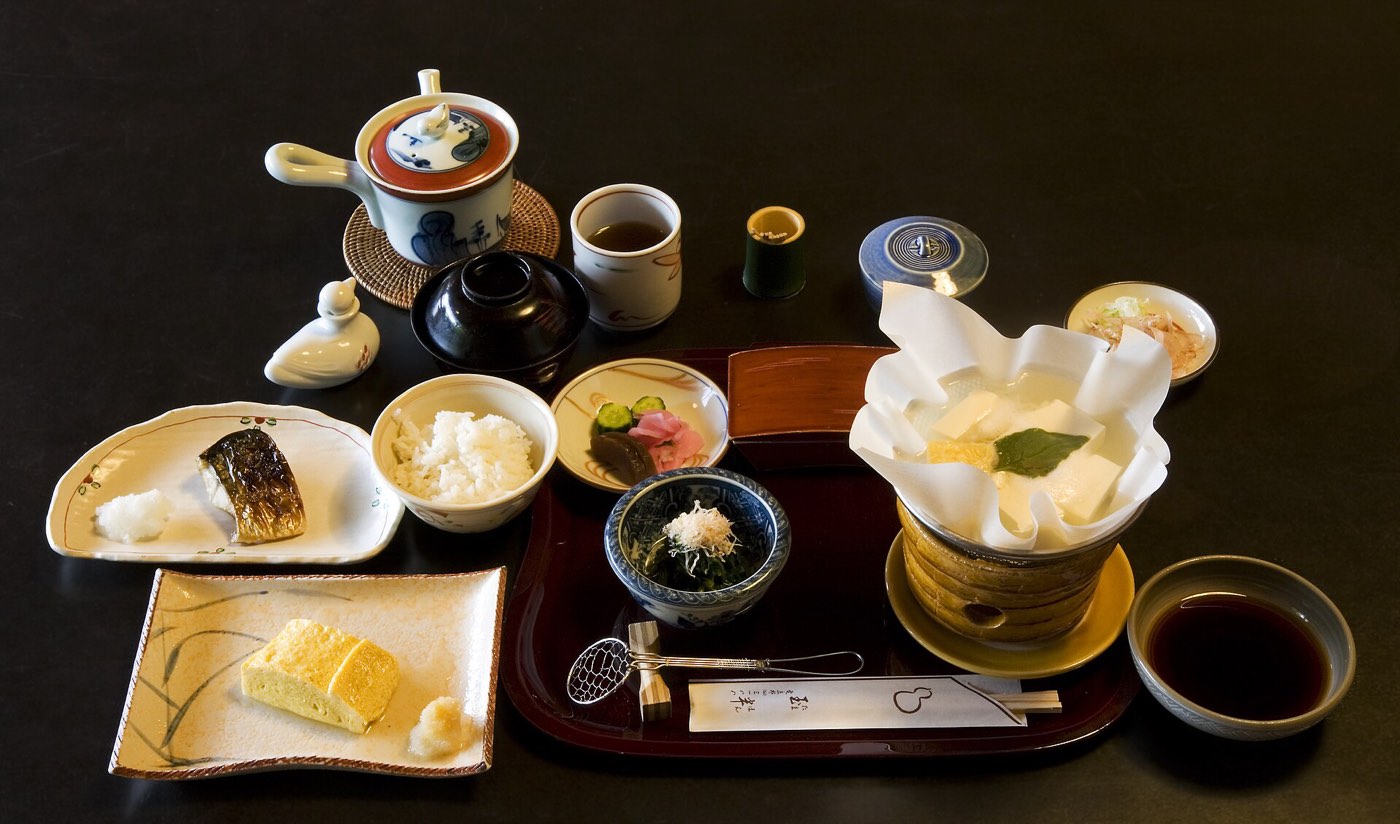
Kyoto's food identity is kaiseki, obanzai, tofu and yuba, and wagashi — and, contrary to the delicate stereotype, dark back-fatty ramen. Do kaiseki once, at lunch, where the same house with the same kitchen charges roughly half of dinner: ¥7,000–10,000 against ¥20,000–30,000. Everything else here is cheap. A bowl of ramen is ¥900–1,500, an obanzai spread ¥3,000–4,000 a head, a genuinely good depachika dinner under ¥2,000. Carry cash, learn to say dashi mo dame if you are vegetarian, and check Tabelog rather than Google for today's hours.
Every Kyoto food type, priced
Prices are per person, before drinks. Where a booking window is listed, it is the point at which the good places are already gone — not the point at which they open.
| Food type | Typical price | When | Book ahead? | Verdict |
|---|---|---|---|---|
| Kaiseki | ¥7,000–10,000 lunch · ¥20,000–30,000 dinner | Lunch, 11:30 opening | Yes — 1–3 months for the famous houses | WORTH IT |
| Obanzai | ¥3,000–4,000 | Dinner, or 7:00 at Nomura | A few days is usually enough | WORTH IT |
| Yudofu | ¥3,000–5,000 | November to February, lunch | No | DEPENDS |
| Shojin ryori | ¥3,000–9,000 plus temple entry | Lunch only | Yes — 3+ days at Shigetsu | WORTH IT |
| Yuba | ¥800 a dish · ¥4,000 for a set | Any time, best in winter | No | WORTH IT |
| Ramen | ¥900–1,500 | 11:00 opening, or after 21:00 | Never — you queue instead | WORTH IT |
| Wagashi | ¥1,300–1,600 with tea | Mid-afternoon | No | WORTH IT |
| Matcha sweets | ¥1,300–1,700 for a parfait | Before 11:00 | No, but expect 30–90 minutes of queue | WORTH IT |
| Depachika | ¥800–2,000 | After 19:00 for the markdowns | No | WORTH IT |
Yudofu is the one on this list that regularly disappoints. You are paying ¥4,000 for hot tofu, and what you are really buying is the temple garden it is served in. Go in winter or do not go.
How to tell a real restaurant from tourist bait
Kyoto has no shortage of good food and no shortage of places charging ¥3,000 for a photograph. The tells are consistent, and the ratings you trust at home are the wrong ratings here.
Learn to read Tabelog, because its scale is compressed. 3.0–3.29 is average, 3.3–3.49 is good, 3.5+ puts a restaurant in the top few percent nationally, 3.7+ is outstanding and 3.8+ is a destination people travel across Japan for. Almost nothing exceeds 4.0. A 3.4 with dozens of detailed Japanese reviews is a far better bet than an inflated Google 4.6 written by people who ate there once, in English, on a Tuesday.
Trap tells: giant English-only signage near Kiyomizu-dera or the bamboo grove; someone standing outside trying to bring you in; unverified "wagyu" skewers at ¥1,500–3,000 a stick; picture menus with fifteen cuisines on them; and — the reliable one — no Japanese customers at 12:30 on a weekday.
Good tells: a handwritten menu, a noren curtain across a narrow doorway, a basement or second-floor location with one small sign, a counter with eight seats, and a queue of salarymen at lunch. In downtown Kyoto the rule is simple: go one street back from the pretty one, or go upstairs.
Kyoto's ¥1,500-a-skewer problem is concentrated in three places — the Nishiki Market aisle, the Kiyomizu approach lanes, and the main bamboo-grove path in Arashiyama. Two hundred metres off any of them, prices halve and quality rises.
Six things nobody tells you before your first meal
None of this is subtle etiquette. It is the practical stuff that catches people out on day one.
Sit down at an izakaya and a small dish you did not order will arrive. That is otoshi, a seating charge of ¥300–800 per person dressed up as food. It is not a scam, it is not optional, and refusing it marks you out. Budget for it and move on.
Not in restaurants, not in taxis, not for the ryokan staff. Leaving money on the table gets you chased down the street by someone returning it. Service is included in the price and the standard is already higher than anything a tip would buy.
Ramen counters, older izakaya, temple restaurants and market stalls are still cash-only in 2026. Carry ¥10,000–20,000 a day and top up at a 7-Eleven ATM, which takes foreign cards at any hour. Japan Post ATMs work too but keep bank hours.
Street food is bought standing and eaten standing, at the stall. Nishiki Market has had signage discouraging walking-and-eating since 2019 and most stalls now provide a spot to stand. It is the single most common visitor mistake in the market.
Late cancellations and no-shows at reserved restaurants carry fees of 50–100% of the course price inside 24–72 hours, and the card you booked with will be charged. If your plans change, cancel the moment you know.
Up to 100% of the courseSmall Kyoto restaurants close for a weekday, a holiday, a family event, or because the fish did not come in. Tabelog is updated by the shops themselves and is far more current. Check it on the day, not the week before.
Vegetarian, vegan and halal in Kyoto
The hidden enemy is dashi — the bonito-and-kelp stock that goes into nearly everything, including dishes described as vegetable. A vegetable tempura, a bowl of udon and a pot of yudofu are all routinely made with fish stock.
Learn one phrase: "dashi mo dame" — "the stock is also no good for me." Saying "vegetarian" alone gets you a plate of vegetables in fish broth, sincerely and helpfully served. Written cards in Japanese help more than spoken English.
Safe harbours: shojin ryori at the temple restaurants (Buddhist cuisine, vegan by 1,200-year-old design — Shigetsu inside Tenryu-ji, Izusen at Daitoku-ji), Vegan Ramen UZU, Towzen, Mumokuteki near Nishiki, and Ajiro Honten for a formal shojin course. Each is built for this and nobody has to improvise.
Halal is thin. Ayam-Ya (halal ramen) and Gyumon (halal yakiniku) are the reliable names, and both get busy. Outside those, assume pork fat and alcohol-based seasonings are present unless the restaurant advertises otherwise. Prayer rooms exist at Kyoto Station and a few large hotels.
Allergy note that catches people: soba restaurants often cook udon in the same water, and shared fryers are the norm. If an allergy is severe, the temple shojin restaurants and department-store restaurant floors are the ones with the clearest kitchen documentation.
When Kyoto's restaurants are shut
One closed weekday is the norm, most often Wednesday or Thursday, and it is decided shop by shop rather than by district. The two big national shutdowns are more disruptive than visitors expect.
New Year, roughly 30 December to 3 January, is the single biggest closure of the year. A substantial share of independent restaurants shut completely, including many of the famous ones, and the depachika run reduced hours. Hotel restaurants and chains stay open. If you are in Kyoto over New Year, book something in advance or plan on convenience stores.
Obon, 8–16 August, closes a smaller but still meaningful share, and staff shortages mean shorter menus at the ones that stay open.
Lunch service in Kyoto is short — typically 11:30 to 14:00, with last orders at 13:30 — and then the city goes quiet until 17:00 or 17:30. Turning up hungry at 15:30 is the most reliable way to end up eating badly. Depachika at Takashimaya and Daimaru, and the restaurant floors above them, cover that gap.
Breakfast is the other gap: almost nothing opens before 10:00. That is a big enough problem that it has its own page.
Food experiences worth paying for
A food tour solves the two problems this page cannot: reading a Japanese-only menu, and getting into small counters that will not take a walk-in from someone who does not speak the language. Temple gates take cash at the door and never sell out — a tour is worth paying for because of the guiding and the hour, not to skip a queue that does not exist.
Kyoto food FAQ
What food is Kyoto famous for?
Kaiseki (the multi-course seasonal meal), obanzai (Kyoto home cooking served as small dishes), tofu and yuba, wagashi sweets with matcha, and pickles. The surprise is ramen: Kyoto's is dark, thick with pork back fat and nothing like the delicate stereotype. Prices run from ¥900 for ramen to ¥139,500 for the top kaiseki course.
How much should I budget for food per day in Kyoto?
About ¥5,000–6,000 per person covers a konbini breakfast, a ¥1,200 ramen lunch and a ¥3,000 dinner. ¥12,000 is a comfortable day with an obanzai dinner and a matcha stop. Add a kaiseki lunch and you are at ¥20,000 for the day. Run the whole trip on the cost page.
Is kaiseki worth the money?
Once, at lunch. The same house charges roughly half at lunch as at dinner — ¥7,000–10,000 against ¥20,000–30,000 — for the same kitchen and a shorter menu. It is a cultural performance as much as a meal, and it disappoints anyone expecting big flavours. Full breakdown on the kaiseki page.
Do I need reservations for restaurants in Kyoto?
For 90% of them, no. Ramen, izakaya, depachika and department-store restaurant floors are all walk-in. Reservations matter for kaiseki (1–3 months), shojin ryori at the temples (3+ days) and any restaurant with a Michelin star or a Tabelog score above 3.7. No-show fees of 50–100% are now standard.
Is it hard to eat vegetarian in Kyoto?
Harder than it looks, because dashi fish stock is in almost everything — including dishes described as vegetable. Say "dashi mo dame" rather than "vegetarian". Kyoto is also the best city in Japan for this once you know where to go: shojin ryori is vegan Buddhist cuisine and has been for 1,200 years.
Do restaurants in Kyoto take credit cards?
Hotels, department stores and mid-to-high-end restaurants do. Ramen counters, older izakaya, market stalls and temple restaurants frequently do not. Carry ¥10,000–20,000 in cash per day and use 7-Eleven ATMs, which accept foreign cards 24 hours.
Why was the restaurant I picked closed?
Most independent Kyoto restaurants close one weekday, usually Wednesday or Thursday, and many close 30 December to 3 January and around Obon (8–16 August). Google's hours are frequently stale. Check the shop's Tabelog page on the day you plan to go.
Is Nishiki Market a good place to eat?
Not really, and it has become one of the most debated calls in Kyoto. It is worth a 30-minute walk before 10:00 or after 15:00 for knives, pickles and tamagoyaki, but the skewers are ¥500–1,500 tourist pricing. The full verdict is here, with better alternatives.