The Kyoto
crowd clock
Four hour-by-hour crowd clocks, ten crowded places with an emptier alternative for each, and a twelve-month score. Tap any hour to see what it is actually like.
Kyoto is only crowded in about ten places, and only between roughly 09:00 and 17:00. Walk five minutes off the main drag and it is a sleepy provincial city where you will queue for nothing. That means every hour outside 9 to 5 is worth double: Kiyomizu-dera opens at 6:00 while its rivals open at 9:00, Fushimi Inari never closes at all, and Gion only becomes Gion after dark. Nothing below asks you to skip a famous place. It asks you to turn up at a different hour.
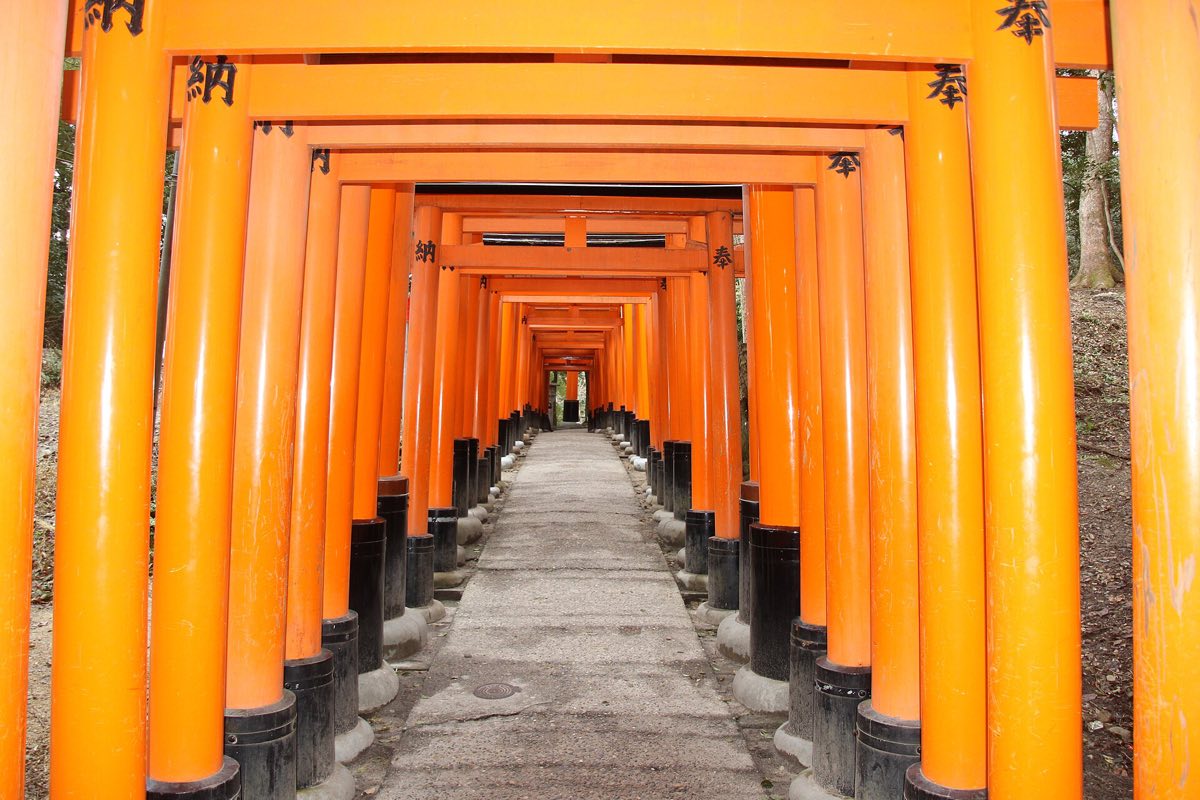
Fushimi Inari, hour by hour
The most timing-sensitive place in Japan, because it never closes and costs nothing. Density drops by roughly 80–90% past the first rest stop at any hour — but the first 400 metres is where every photograph gets taken, and that is the bit that jams.
The best hour in Kyoto: real daylight, zero queue, first stalls opening. This is the answer.
Kiyomizu-dera, hour by hour
The 6:00 opening is the best crowd hack in the city, and it exists because Kiyomizu is a working temple with morning prayers. Every rival headline sight opens at 08:30 or 09:00. Closing time shifts with the season and with illumination nights, so check before you plan a late visit.
Opening. ¥500, a dozen people on the veranda, and the only reason to set an alarm in Kyoto.
The Arashiyama bamboo grove, hour by hour
Free and technically open around the clock, but unlit — the Hanatoro illumination that used to light it was discontinued after December 2021 and has not returned. The honest description is a five-minute corridor between two fences, which is why the hour matters more here than anywhere else.
Excellent. A handful of photographers. JR from Kyoto Station is 15 minutes and ¥240.
Kinkaku-ji, hour by hour
The hardest of the four to time, because there is no early option — the gate does not open until 09:00 and the path is one-way, so once it jams you cannot step back for a clearer shot. Forty minutes covers the whole visit at any hour.
Opening. Twenty minutes of relative calm, and the pond reflection is at its cleanest.
The ten crowded places, and what to do instead
This is the whole site in one table. In every case the alternative is a few hundred metres away, usually cheaper, and usually better.
| Place | Worst hours | Best hour | Emptier alternative, minutes away | Verdict |
|---|---|---|---|---|
| Fushimi Inari, lower gates | 10:00–13:00 | 06:00 | The trail above Yotsutsuji, 30 min up — same gates, a tenth of the people | WORTH IT |
| Kiyomizu-dera veranda | 11:00–15:00 | 06:00 | Kodai-ji (¥600) and Ishibei-koji, 8 minutes north and near-empty | WORTH IT |
| Sannenzaka & Ninenzaka | 11:00–16:00 | 07:00 | Ishibei-koji, one street west, and free | WORTH IT |
| Arashiyama bamboo grove | 10:00–15:00 | 07:00 | Okochi Sanso's own bamboo and garden, ¥1,000 with matcha, 3 minutes on | DEPENDS |
| Kinkaku-ji | 11:00–15:00 | 09:00 | Toji-in and the Ryoan-ji back pond, both 10 minutes away and both quiet | WORTH IT |
| Togetsukyo bridge, Arashiyama | 11:00–16:00 | 08:00 | The north bank path up to Kameyama Park, free | DEPENDS |
| Nishiki Market | 11:30–14:00 | 09:00 | Demachi Masugata arcade near the Kamo Delta — locals, not tour groups | DEPENDS |
| Hanamikoji, Gion | 17:00–19:00 | 07:00 or 21:00 | The Shirakawa canal lane, 400m north — same lanterns, a fifth of the people | WORTH IT |
| Ginkaku-ji approach | 10:00–15:00 | 08:30 | Honen-in, free, 8 minutes south along the Philosopher's Path | WORTH IT |
| Kyoto Station bus terminal | 08:00–10:00, 16:00–18:00 | Never | The Karasuma or Tozai subway, or JR. Skip city buses entirely | SKIP |
Everything on the right-hand column is written up on the temples-nobody-visits page. Nothing there needs a ticket in advance.
Twelve months, scored
Crowd bars are relative to Kyoto's own worst weeks, not to other cities. The two red months are not marginal — early April and late November are a different city.
June is the underrated month. The rainy season starts around 6 June, but it rarely rains all day — you get short heavy bursts, the greenest moss of the year, no national holidays, and hotel rates well below spring. Bring an umbrella and a change of socks and you have Kyoto at a discount. Mid-to-late January is calmer and cheaper still, with crisp air and the clearest views of the year.
What overtourism in Kyoto actually looks like
The headline figures are real, and so is the fact that they are concentrated in a very small footprint.
How Kyoto is actually managing this
There are no numeric visitor caps anywhere in Kyoto. No temple limits daily entries, no district requires a permit, and nothing you want to see is rationed.
Fushimi Inari remains free and open 24 hours, and there is no proposal to change that. Kiyomizu-dera still opens at 6:00 for ¥500. No Kyoto temple has adopted the dual pricing that Himeji Castle introduced in March 2026, where non-residents pay ¥2,500 against ¥1,000 for locals.
What the city does instead is dispersal: live crowding advisories, campaigns pushing visitors toward quieter districts and quieter hours, express buses (EX100 and EX101, weekends and holidays, flat ¥500) that bypass the worst local routes, and the abolition of the ¥700 tourist bus day-pass in 2023–24 to move people onto trains. Since 1 March 2026 there is also a lodging tax of ¥200 to ¥10,000 per person per night by room rate, which funds this work.
The resident grievances are real and specific. Local buses that people rely on to get to work are full of luggage. Restaurant waits of an hour exist in places that had no wait at all before 2020. Geiko and maiko have been physically followed, which is why the private alleys off Hanamikoji were closed to visitors in April 2024 with signposted fines up to ¥10,000, and why photographing them without consent has been banned since 2019.
The pushback is also real. Kyoto's tourism revenue reached around ¥2.05 trillion, satisfaction sits at 97.3%, and a large share of residents work in or around the industry. Visitors who use a few words of Japanese, keep their voices down on trains, take their rubbish with them and step off the main route consistently report the opposite of hostility. The friction is with a specific behaviour at a specific hour, not with foreigners.
So — am I adding to the problem by going? Marginally, yes, and you can make that margin close to nothing. If you go in January, February, June or early December rather than April or late November, if you are at the famous places before 09:00 or after 17:00, if you take the train instead of the 205 bus, and if you spend two of your days at Sanjusangendo, Daitoku-ji, To-ji and Nanzen-ji instead of a third pass at the same ten spots, you are not part of the crush. You are also, straightforwardly, having a better trip.
The bookings that solve timing
Every place on this page is walk-up and cash at the gate. Temple gates take cash at the door and never sell out — a tour is worth paying for because of the guiding and the hour, not to skip a queue that does not exist. These three exist to get you there at an hour you would not otherwise manage.
Kyoto crowds FAQ
Is Kyoto too crowded to enjoy in 2026?
No. It is crowded in about ten specific places between 09:00 and 17:00, and those ten places are a rounding error against roughly 1,600 temples. Visitors who report a miserable Kyoto were almost always at Kinkaku-ji, the bamboo grove and Kiyomizu-dera between 11:00 and 15:00 on the same day.
What time should I get to Fushimi Inari to avoid crowds?
Before 07:00, or after 21:00. It is free and open 24 hours, so both work. At 06:00 you get daylight and an empty Senbon Torii; at 21:00 you get lit gates and effectively nobody. Arriving at 10:30 is the most common single mistake made in Kyoto.
When is the least crowded time to visit Kyoto?
Mid-to-late January, followed by February and June. January is the calmest and cheapest week-for-week of the whole year, with crisp clear air. June brings the rainy season from about 6 June, but rarely all-day rain, the best moss of the year and no national holidays. Avoid the first two weeks of April and 20 November to 5 December.
Am I adding to the problem by going to Kyoto?
Marginally, and you can shrink that margin to almost nothing. Travel outside April and late November, be at the famous places before 09:00 or after 17:00, use trains rather than the local buses residents depend on, and give two of your days to the quiet temples. Tourism is around ¥2.05 trillion of the local economy — the objection is to a behaviour and an hour, not to visitors.
Are Kyoto's buses really that bad?
The tourist-heavy routes are, yes. Flat fare is ¥230, the 205 at peak is a crush, and the ¥700 bus-only day pass was abolished in 2023–24 precisely to move visitors onto trains. What survives is the Subway & Bus 1-Day Pass at ¥1,100 and the subway-only pass at ¥800. Tourist Express buses EX100 and EX101 run weekends and holidays at a flat ¥500.
Does going on a weekday actually help?
Less than you would hope. Weekday mornings are noticeably better at Kinkaku-ji and Ginkaku-ji, but at Fushimi Inari and the bamboo grove the difference between a Tuesday and a Sunday at noon is small. The hour beats the day of the week by a wide margin, every time.
Is it worth visiting Kyoto in the rainy season?
Yes, and it is the value pick. June rarely rains all day, the moss gardens are at their best wet, hotel rates drop, and crowds at every place on this page fall sharply. Fushimi Inari's torii tunnels are effectively covered. See the rainy-day page for the full list.
Which single hour is the worst in Kyoto?
13:00. Every clock above peaks at or near it: Fushimi Inari's lower gates, Kiyomizu's veranda, the bamboo corridor and Kinkaku-ji's viewing rail are all at their worst then. Build your day so that 12:00 to 15:00 is lunch, a rest at the hotel or an indoor sight like Sanjusangendo.