Should you stay near
Kyoto Station?
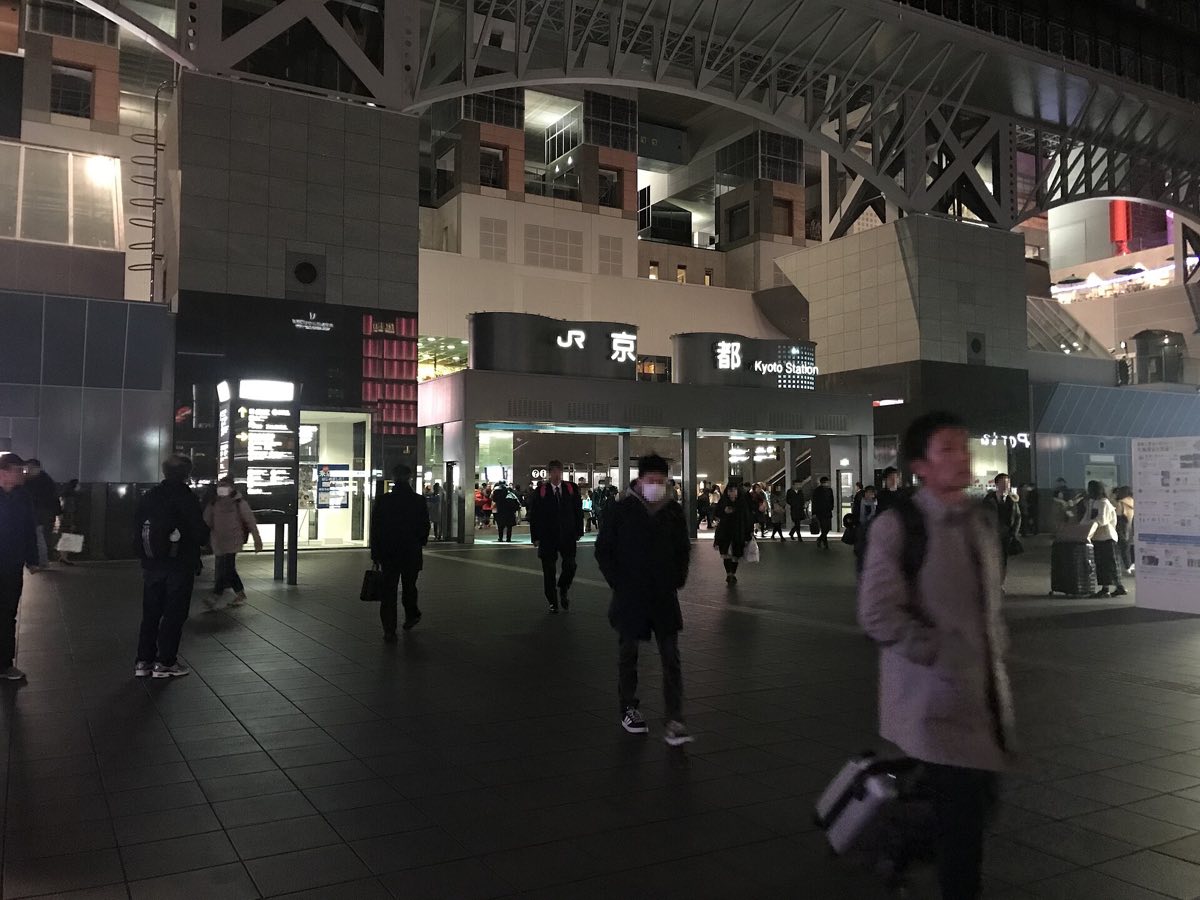
Book here if your itinerary is day-trip heavy, if you are travelling with luggage or children, or if you are bracketing a Shinkansen. Nothing else in Kyoto is this connected: Nara 35–45 min, Osaka 24–29 min, Uji 17 min, Himeji about 55 min, and every airport bus and Haruka train arrives at your feet. What you give up is the evening — this is a canyon of business hotels that is dead by 20:00, with no old-Kyoto texture at all. Rooms start around $40 and a decent one costs $130–250, roughly $100 a night under Gion.
Who the station area is for, and who should avoid it
This district exists to solve logistics, and it solves them better than anywhere else in Japan. It will not give you a single memorable evening. Decide which of those you are buying.
Stay here if you are doing two or more day trips, if you have an early Shinkansen or a KIX transfer, if you are travelling with large suitcases or small children, or if you simply want the cheapest acceptable bed in Kyoto. It is also the honest pick for a one-night stopover: dump the bags, do Fushimi Inari at dawn, be on a train by 10:00.
Avoid it if this is a short, atmosphere-led trip. The area around the station is offices, bus bays, chain izakaya and hotel lobbies. After 20:00 the restaurants inside the station close and the streets outside empty. If your holiday depends on walking somewhere beautiful after dinner, you will resent the twenty-minute journey back east every night.
The trade in numbers: a mid-range station hotel runs $130–250 against $250–450 in Gion for equivalent quality. Over five nights that is roughly $600 saved, which buys two kaiseki lunches and a Himeji day trip. Whether that is a good deal depends entirely on how much you value 19:00 to 22:00.
The full district comparison, with price bands, is on the where to stay hub.
What to do around Kyoto Station
More than people expect, and the best of it is free. Hara Hiroshi's 1997 station building is a genuine piece of architecture and takes about thirty minutes to walk.
The station itself is the sight. Eleven floors of restaurants, a 171-step LED staircase that runs animations in the evening, the Skyway glass walkway across the concourse on the 11th floor, and the rooftop Sky Garden. All of it is free and open to anybody. Ramen Koji on the 10th floor lines up regional ramen shops from across Japan and is the easiest good dinner in the district.
Kyoto Tower: SKIP. The observation deck runs about ¥900–1,000, and the free Skyway and Sky Garden a hundred metres away give you a near-identical view of the same city from the same height band. The one argument for the Tower is that Kyoto Tower is in the view from the station and not in the view from itself, which is a joke people make because the deck is otherwise unremarkable.
Higashi Honganji and Nishi Honganji are a 7 and 15-minute walk north-west, both free, both colossal — Higashi Honganji's Founder's Hall is one of the largest wooden buildings on earth — and both nearly empty because no coach tour stops there. This is the best free hour in the district by a distance; more like it on temples nobody visits.
To-ji is ¥500 and a 15-minute walk south-west, with the tallest wooden pagoda in Japan and a large flea market on the 21st of each month. teamLab Biovortex is 8 minutes' walk from the station at ¥3,800 adult, ¥2,800 teen and ¥1,800 child, tickets on the official site only — the best rainy-day answer in Kyoto, covered on its own page. The Kyoto Railway Museum is ¥1,500 and closed Wednesdays, and the Aquarium is ¥2,400, both a 20-minute walk west.
Where to eat around Kyoto Station
Eat inside the building. That sounds like a concession and it is not — the station's restaurant floors are genuinely good, open late by Kyoto standards, and take walk-ins when nowhere else will.
Ramen Koji, 10th floor: eight or nine shops from different ramen regions, ticket machines at the door, ¥900–1,300 a bowl. The best introduction to how different Japanese ramen actually is, and no reservation exists or is needed. Kyoto's own style is dark, back-fatty and heavy — the opposite of the delicate cooking the city is known for. Full context on the ramen page.
The 11th floor runs proper restaurants — tempura, tonkatsu, sushi, kaiseki-lite sets around ¥2,500–5,000 — with views over the concourse. Isetan's basement in the same building is a depachika: bento, sashimi, wagashi and prepared obanzai, all discounted heavily in the last hour before closing.
Outside the building, Porta underground and Kyoto Tower Sando across the road cover cheap and fast. The chain izakaya on Shiokoji-dori are fine and unmemorable. What does not exist here is the small owner-run counter you came to Kyoto for — for that, ride four minutes to downtown or twelve to Gion.
Practical note: most station restaurants stop seating between 21:00 and 22:00, and the surrounding streets are quiet well before that. Eat before 20:30 or eat conbini. The wider food picture is on the food page.
The station area, practically
Where to sleep near Kyoto Station
Hotel Granvia is literally inside the station building and wins on convenience outright. The Thousand Kyoto and Dusit Thani are the design picks; Rihga Royal at $125–225 and Kyoto Tower Hotel at $100–150 are the reliable middle; Izuyasu and Matsubaya are real ryokan at $100–200, which is the cheapest genuine ryokan entry point in the city. South of the station, OMO3 Kyoto Toji runs $90–150 with rooftop views of To-ji's pagoda. Hostels start around $30.
Worth sorting before you arrive
Neither is essential. Both solve a problem that is specific to basing yourself at the station: too much luggage, and too many sights spread too far apart.
Staying near Kyoto Station FAQ
Is Kyoto Station a good place to stay?
For logistics, yes — nothing in Japan is better connected, and rooms cost roughly $100 a night less than Gion. For atmosphere, no. It is a business-hotel district with no old-Kyoto texture that empties after 20:00. Book here if you are doing day trips or arriving late, not if you have three days and want to fall in love with the city.
Is Kyoto Tower worth it?
No — skip it. The deck costs about ¥900–1,000, while Kyoto Station's 11th-floor Skyway and rooftop Sky Garden are free, a hundred metres away, and give you a near-identical view. Spend the money on the ¥500 you will need at three temples instead.
How far is Kyoto Station from Gion?
Bus 100 or 206 takes 15–20 minutes for a flat ¥230, or a taxi is ¥1,000–1,500. There is no direct subway. Downtown is easier: 4 minutes and ¥220 on the Karasuma line to Shijo, then a 12-minute walk east to Gion.
Where do I put my luggage in Kyoto?
The station's coin lockers fill by around 10:00 in high season, which catches out most people arriving on a morning Shinkansen. Book a Radical Storage point in advance instead, or use takkyubin luggage forwarding at ¥2,000–3,000 per bag for next-day delivery to your next city.
What is the cheapest area to stay in Kyoto?
The station area, by a clear margin. Hostel beds run $30–60, business hotels $60–110, and even real ryokan start around $100 here against $250+ elsewhere. Remember the lodging tax is charged per person per night on the room rate — under ¥6,000 it is only ¥200.
Is there anything to see near Kyoto Station?
More than the district's reputation suggests: Higashi and Nishi Honganji are free, enormous and nearly empty, To-ji is ¥500 with Japan's tallest wooden pagoda, and teamLab Biovortex is an 8-minute walk at ¥3,800. The station building itself is worth thirty minutes and costs nothing.
Should I stay near Kyoto Station if I'm doing day trips?
Yes — this is the strongest case for it. Nara is 35–45 minutes, Uji 17, Osaka 24–29, Himeji about 55 by Shinkansen. On a trip with two or more day trips you will save an hour a day over staying in Higashiyama. Options are ranked on the day trips hub.