Kyoto in
5 days
Days one to three cover the city everyone comes for. Days four and five are the ones that change how you feel about Kyoto — a walking day through Northern Higashiyama, and a choice between three genuinely different escapes.
Run the 3-day itinerary first: Southern Higashiyama, Arashiyama and the northwest, then the southern rail axis. Day 4 is the walk almost nobody schedules — Ginkaku-ji at 08:30, the Philosopher's Path, and four temples down to Nanzen-ji, all on foot and all quiet. Day 5 is a choice of one: Kurama and Kibune, Ohara, or a full day in Nara or Uji. Entry fees across five days come to roughly ¥7,500 per person.
The first three days, in two sentences each
These are covered stop by stop in the 3-day itinerary — trains, opening times and fees included. Here is what each day is for, so you can see how days 4 and 5 fit on top.
Day 1 — Southern Higashiyama. Kiyomizu-dera at its 6:00 opening (¥500), the Sannenzaka lanes while they are still empty, Kodai-ji and Kennin-ji, then Sanjusangendo's 1,001 statues in the late afternoon. It ends on Hanamikoji at 17:45 and dinner off Pontocho, which is the best evening of the trip.
Day 2 — Arashiyama and the northwest. The bamboo grove before 08:30, Tenryu-ji's pond garden at opening, Okochi Sanso for ¥1,000 including matcha, then the Randen tram east to Kinkaku-ji and Ryoan-ji. The tram is the point: it replaces the bus that ruins this day for most people.
Day 3 — the southern rail axis. Fushimi Inari at 06:15, free and empty, up to the Yotsutsuji viewpoint and back down by 09:00. Then south on the same line to Uji for matcha and Byodo-in, or across to Nara, with Tofuku-ji or the Fushimi sake district on the way home.
One structural note for five days: put your rest afternoon on Day 3 or Day 4, not Day 5. Temple fatigue is real and it lands somewhere around the fifteenth garden, which on this schedule is Thursday.
Northern Higashiyama, entirely on foot
Ginkaku-ji at opening
¥500, opens 08:30. The Silver Pavilion has no silver on it and is the better temple for it: a moss-and-sand garden, a raked cone of white gravel, and a hillside loop that looks back over the whole city. Half the crowd of Kinkaku-ji and twice the time worth spending. Full verdict, or the head-to-head if you are still choosing.
The Philosopher's Path south
Two kilometres of canal-side path under cherry trees, free, and about 30 minutes at a walking pace — longer, because you will stop. It is mobbed in the first week of April and genuinely peaceful the other fifty weeks. Cafés and craft shops line the north end.
Honen-in — free, and empty
Two minutes off the path through a thatched gate, with two raked sand mounds either side of the approach that the monks re-rake by hand. Grounds are free. It is the best argument on this site that the quiet temples are not a consolation prize. See temples nobody visits.
Eikan-do Zenrin-ji
¥600, and around ¥1,000 in the autumn window. Three thousand maples, a hillside pagoda you climb to, and the Mikaeri Amida — a statue looking back over its shoulder. In late November this is the number-one maple temple in Kyoto and a scrum; the rest of the year it is calm.
Lunch, then Nanzen-ji
Eat around Okazaki or on the approach — yudofu (hot tofu) is the local dish here and runs ¥2,000–4,000 for a set. Then Nanzen-ji: grounds free, the Sanmon gate ¥600 to climb, and the brick Meiji aqueduct running straight through the temple precinct, which is the photograph. Arrive from Keage subway via the nejirimanpo, the spiral-brick tunnel under the old rail incline — it is 20 metres long and the best entrance to any temple in the city.
Heian Shrine garden
Grounds free, garden ¥600. The shrine buildings are a 1895 replica and the enormous vermillion torii out front is the landmark; the garden behind is the actual reason to pay, with a covered bridge over a pond and weeping cherries that peak in early April, a few days after everywhere else.
Okazaki museums, or stop here
The Kyoto City Kyocera Museum of Art and the National Museum of Modern Art sit side by side five minutes from Heian Shrine, both around ¥430–1,500 depending on the exhibition. This is the rainy-day insurance for Day 4 — see the rainy-day options — and skippable in good weather.
Dinner downtown
Tozai subway from Higashiyama to Karasuma-Oike, four minutes. Day 4 is the night to book something: kaiseki lunch is roughly half the price of dinner if you would rather trade, and a mid-tier kaiseki dinner runs ¥20,000–30,000 against ¥7,000–10,000 at lunch. How kaiseki pricing works.
Kurama to Kibune — the cedar-forest day
Eizan Railway from Demachiyanagi
30 minutes and ¥470 to Kurama, on a two-car mountain line with panoramic-window cars. Not JR, and not covered by a JR Pass — the Kansai Thru Pass does cover it. Demachiyanagi is the north end of the Keihan line, 10 minutes from downtown.
Kurama-dera and the ridge hike
¥500 entry, then roughly 90 minutes over the ridge to Kibune through cedar roots and small shrines. It is a real hike with steps and elevation, not a stroll, and it is the best forest walk within an hour of central Kyoto. A cable car covers the first climb for ¥200 if you want it.
Kifune Shrine, and the water fortunes
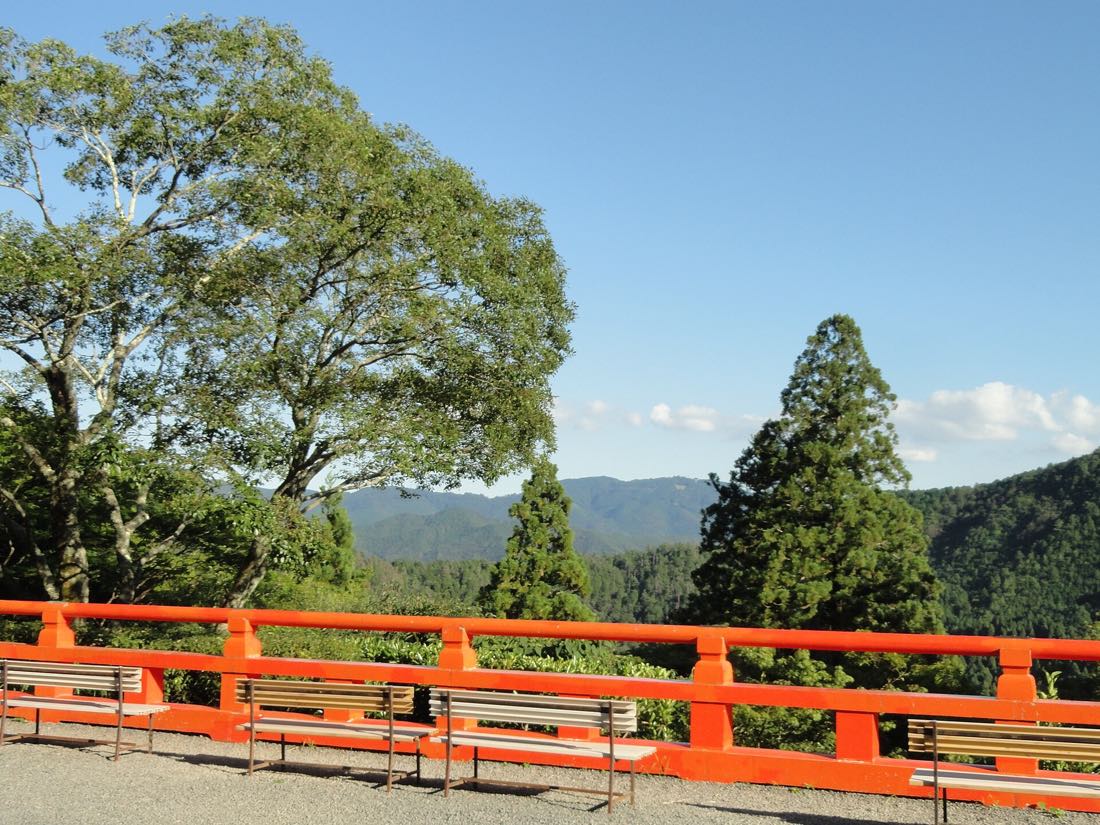
Free. The lantern-lined stone staircase is the shot everyone comes for. Buy a ¥200 paper fortune and float it in the spring water to make the text appear — a gimmick, and a good one. The village is one street long.
Kawadoko lunch over the river
June to September, Kibune's restaurants build dining platforms directly over the river, and the gorge runs about 10°C cooler than downtown Kyoto — the single best answer to a Kyoto summer. Set lunches start around ¥5,000. Hirobun does nagashi-somen, noodles sent down a bamboo flume that you catch with chopsticks, at ¥1,500–1,700; it takes no reservations and the queue is a cult in its own right, so arrive before 11:00 or expect two hours.
Back down the mountain
A short bus from Kibune-guchi station, then the Eizan line back to Demachiyanagi. If it is late October, the Kurama Fire Festival falls on 22 October and turns this into a completely different and much more crowded day.
The other two ways to spend the last day
Pick one. All three fill a day, and doing two of them in five days is how people end up remembering trains instead of temples.
| Option | Getting there | What you actually do | Cost | Best for | Verdict |
|---|---|---|---|---|---|
| A · Kurama–Kibune | Eizan 30 min · ¥470 from Demachiyanagi | 90-minute ridge hike over Kurama-dera, then kawadoko lunch over the river June–Sept | ¥470 + ¥500 + lunch | Anyone with temple fatigue | WORTH IT |
| B · Ohara | Bus 17, 60 min · ¥600 from Kyoto Station | Sanzen-in's moss gardens and jizo statues, then Hosen-in for matcha under the blood ceiling | ¥600 + ¥700 + ¥900 | Gardens, and a slow morning | WORTH IT |
| C · Nara or Uji, full day | Kintetsu 45 min ¥760 · or JR 17 min ¥240 | Nara: the Great Buddha and 1,200 deer. Uji: matcha, Byodo-in and the Nintendo Museum | ¥760 + ¥800 · or ¥240 + ¥900 | First trips, and children | WORTH IT |
Ohara is the only one of the three with a hard curfew: the village is effectively dead by 17:00, buses thin out, and there is nothing to do after dark. Go in the morning. Sanzen-in is ¥700, Hosen-in ¥900 including matcha and a sweet — its "blood ceiling" is floorboards from Fushimi Castle, where a garrison committed suicide in 1600, reused as a memorial. Still choosing between Nara and Uji?
What repeat visitors do that first-timers never do
Ask anyone on their third Kyoto trip what they are doing and almost none of it appears on a first-timer list. The pattern is consistent: they leave the ring road, and they book one thing they make with their hands.
They go to Ohara and Takao. Both are an hour out by bus, both have gardens the equal of anything in the city, and neither has a queue. Takao's colour also runs one to two weeks earlier than central Kyoto, which makes it the early-November answer when everyone else is staring at green maples. See the autumn page.
They spend an afternoon at Daitoku-ji. Not one temple but a walled complex of two dozen sub-temples, four or five of which open to the public at ¥300–400 each. You can sit in front of a dry garden for half an hour and be the only person there, twenty minutes from Kyoto Station.
They apply for Katsura. Katsura Imperial Villa and Shugakuin are free but need an application to the Imperial Household Agency weeks ahead, with a passport and a fixed tour slot. Saiho-ji, the moss temple, needs a postal or online application and charges ¥4,000. These are the only sights in Kyoto that genuinely cannot be walked into.
They do Kurama in the evening. Kibune's kawadoko season runs June to September, and dinner over the river at dusk is a different experience from lunch — cooler, quieter and about twice the price.
They book a craft. A tea ceremony in a machiya, a knife-sharpening session, a ramen class, indigo dyeing in Nishijin. Tea ceremony has the highest review floor of any experience type in Kyoto and runs from ¥1,000 at a temple to ¥10,000 for a private house — how to choose one.
What to lock in for a five-day trip
Five days adds two things that need advance action and three that do not. In order of lead time.
The two days worth outsourcing
Days 1 to 4 are all trains and walking and need no help. Day 5 is where a guided option genuinely saves a morning of timetable arithmetic.
Five days in Kyoto FAQ
Is 5 days in Kyoto too many?
No. Five days is the length at which people stop reporting that they rushed. Three days covers the famous sights; days four and five buy Northern Higashiyama, one real day trip, and an afternoon doing nothing, which is what the city is actually good at.
Should I do a day trip on day 5 or stay in Kyoto?
Do the day trip, but only one. Kurama and Ohara are both under an hour and feel like a different country; Nara is 45 minutes and ¥760 by Kintetsu. What does not work is two day trips in five days — you end up spending a third of the trip on trains.
Kurama or Ohara for the last day?
Kurama if you want to walk and it is June to September, when the kawadoko platforms over the river run 10°C cooler than the city. Ohara if you want gardens and a slower morning — Sanzen-in's moss and jizo statues are the best of their kind near Kyoto. Ohara dies at 17:00, so go early.
How much do five days of temple entries cost?
Roughly ¥7,500 per person if you follow this itinerary — most temples are ¥500–800, with Nijo Castle at ¥1,300 with the palace and Okochi Sanso at ¥1,000 including matcha. Fushimi Inari, Honen-in, Nanzen-ji's grounds and the Philosopher's Path are all free. Full breakdown on the cost page.
Do I need to change hotels during five days in Kyoto?
No, and you should not. The city is 40 minutes end to end by train and every day above starts from a station. Pick one bed downtown or in Higashiyama and stay in it — see where to stay. The exception is swapping one night for a ryokan, which is worth doing once.
What is there to do in Kyoto that is not temples?
By day four you will want this list: Nishiki Market and a cooking class, the Fushimi sake district's 40 breweries, the Kyoto Railway Museum at ¥1,500, teamLab Biovortex at ¥3,800, a tea ceremony, the Kamo riverbank, and Nishijin's textile workshops. See everything ranked.
Is the Philosopher's Path worth walking outside cherry blossom season?
Yes, and it is better. Two kilometres of canal path, free, about 30 minutes at pace, with Honen-in and Eikan-do hanging off it. In the first week of April it is one of the three most crowded places in Kyoto; in June or November it is a quiet residential walk with cafés.